
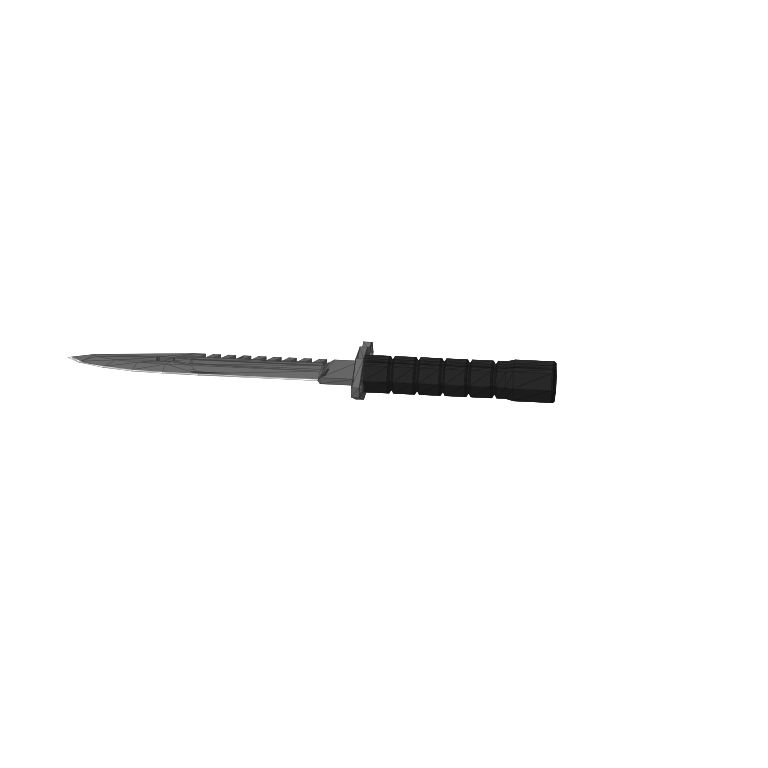
In-game item only. This page discusses equipment in Dazed Games’ How to Fish.
- Category
- Melee
- Route stage
- Lighthouse
- Reference price
- $45
- Damage reference
- No fixed figure in the reference
Game version and evidence: Base equipment prices, damage and catch pools: Patch 1.0.10 reference. These figures are not a new playtest of the latest release.
Game imagery: How to Fish by Dazed Games. Rights remain with the respective owners. Media and source notes.
Where the Knife fits
The Knife costs $45 at the Lighthouse stage and serves as a close-range finisher. It is a way to handle manageable catches while preserving firearm supplies, but it still requires the player to stand near an active creature.
Prepare the purchase and the encounter
Decide whether the next purchase should improve routine fishing or prepare the story encounter. If starter catches are already manageable, leaving money for the quest route may be more useful than immediately replacing another melee tool.
Use an open landing area and keep a clear retreat path. Melee equipment asks more of positioning than a ranged weapon, especially when a creature is large enough to occupy most of the available space.
Make the weapon work for the trip
Pick a catch you can control, move in for a deliberate attack and give yourself room to react. Avoid letting a routine finishing attempt push you into scenery, the edge of the boat or a pile of loose objects.
Treat larger encounters as a separate decision. A weapon that comfortably handles small shell creatures does not automatically make standing close to a story boss the easiest approach.
Compare the complete setup
The reviewed catalog does not publish a fixed Knife damage value; upgrades affect melee output. Check the value in the installed game when comparing parts or deciding whether to keep upgrading.
Brass Knuckles cost $24, while the later Forest Pistol costs $50. The meaningful comparison is the complete routine you can afford: purchase price, the need for firearm supplies, and whether your working area lets you use the weapon safely.
Decide what the additional twenty-one coins buys you
The Knife’s 45-coin reference price sits above the 24-coin Brass Knuckles and just below the later 50-coin Forest Pistol. Those are purchase prices for different options, not a tested performance ladder. If a close-range setup already handles the starter catches comfortably, the additional 21 coins for the Knife needs a practical reason before it takes money from navigation or recovery supplies.
For an illustrative balance of 60 coins, the Knife leaves 15. Reserving ten for the Radar leaves five. Buying both Lighthouse melee options would cost 69 coins, so that same balance cannot cover the pair. These examples show why buying every item is a different goal from preparing one useful routine. Count the equipment you already own before adding a second purchase to the basket.
Match the tool to the catch you can control
The Lighthouse ordinary pools make a useful starting comparison. Brown Crab and Shrimp require no purchased bait on the Crab Fishing Rod; Rock Crab and Lobster use Hot Dog bait. Their raw bases are three, five, seven and nine coins. A small collection trip can therefore be organised by the two setups without assuming the Knife changes which catch bites.
Choose a landing point with room to approach and then step away. If objects block that path, clear them before pulling in another creature. The Knife’s close-range role is a reason to prepare the space rather than a promise that standing beside every target is safe. A routine that costs frequent food or recovery may be less useful to your budget even when it saves firearm supplies.
Measure the cash contribution without invented damage
Five hypothetical unmodified Lobster sales at nine coins total 45, matching the recorded Knife purchase. If those catches are associated with five separate one-coin Hot Dog purchases in an illustrative ledger, the difference after bait would be 40 before any other expense. The example does not establish how many purchases your actual session uses or whether every result is Lobster.
The same care applies to upgrades. The reference has no stable Knife damage value, so it cannot support a numerical hit count or a damage-per-coin comparison with Brass Knuckles. Use your current displayed equipment values at the same upgrade state for that decision. Price arithmetic can be checked from the known figures; combat efficiency needs additional observations.
Do not carry ordinary-catch habits straight into Spider Crab
The first story encounter uses the Empty Beer Can received through the Lighthouse Keeper. Before attaching it to the Crab Fishing Rod, decide where you will fight and how you will retrieve the shell. The boss’s movement and the smaller catch-finishing routine are different questions. Use the encounter page’s supported advice rather than treating a successful melee finish on a Lobster as a universal tactic.
A player comfortable at close range can still choose a different setup for a particular fight. Equipment choice should leave the overall route executable, including healing, the shell hand-in and the separate Radar purchase. There is no need to prove that the Knife can complete every possible encounter before you continue the campaign. Secure the required result first, then return for optional practice if that is your goal.
Keep a role for the tool after reaching Forest
The Forest stage introduces the Pistol and Shotgun alongside new lure choices. A ranged purchase can address targets that are awkward to approach, while a retained melee tool can still finish catches you already manage reliably. Compare the additional purchase and supply needs with your next quest, rather than replacing the entire equipment set because another shop has become accessible.
Before ending a session, locate the Knife and separate it from food, quest trophies and surplus catches. The historical equipment notes describe cleaning a cooked tool in water and limited persistence for ground items. They do not make loose storage unlimited. Keep the important tool identifiable so the next session begins with a usable setup rather than an unnecessary replacement purchase.
Guide images
View 2 related images